
Books
Enhancing leadership development in all levels of education both public and private.

Ethics for Educational Leaders
by Weldon Beckner
Appropriate to all levels of professional development for educational leaders, this brief book emphasizes the practical application of contrasting philosophical and ethical concepts to realistic educational leadership challenges. Recognizing that educational administrators are required to make decisions in problem situations without ideal solutions, the major purpose of the book is to provide a philosophical and theoretical base along with practical suggestions and activities to use that foundation in making the best decisions possible in difficult situations.
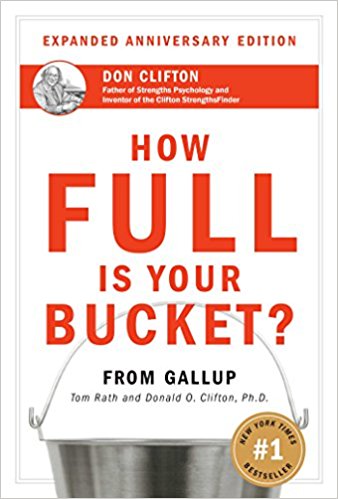
How Full Is Your Bucket?
by Tom Rath, Ph.D. Donald O. Clifton
How did you feel after your last interaction with another person? Did that person — your spouse, best friend, coworker, or even a stranger — “fill your bucket” by making you feel more positive? Or did that person “dip from your bucket,” leaving you more negative than before? The #1 New York Times and #1 BusinessWeek bestseller, How Full Is Your Bucket? reveals how even the briefest interactions affect your relationships, productivity, health, and longevity. Organized around a simple metaphor of a dipper and a bucket, and grounded in 50 years of research, this book will show you how to greatly increase the positive moments in your work and your life — while reducing the negative. Filled with discoveries, powerful strategies, and engaging stories, How Full Is Your Bucket? is sure to inspire lasting changes and has all the makings of a timeless classic.
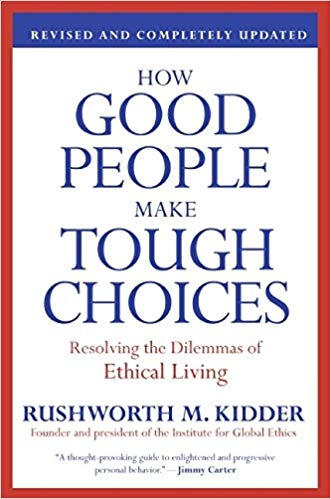
How Good People Make Tough Choices
by Rushworth M. Kidder
“A thought-provoking guide to enlightened and progressive personal behavior.”
—Jimmy Carter
An essential guide to ethical action updated for our challenging times, How Good People Make Tough Choices by Rushworth M. Kidder offers practical tools for dealing with the difficult moral dilemmas we face in our everyday lives. The founder and president of the Institute for Global Ethics, Dr. Kidder provides guidelines for making the important decisions in situations that may not be that clear cut—from most private and personal to the most public and global. Former U.S. senator and NBA legend Bill Bradley calls How Good People Make Tough Choices “a valuable guide to more informed and self-conscious moral judgments.”

Icons and Idiots: Straight Talk on Leadership
by Bob Lutz
When Bob Lutz retired from General Motors in 2010, after an unparalleled forty-seven-year career in the auto industry, he was one of the most respected leaders in American business. He had survived all kinds of managers over those decades: tough and timid, analytical and irrational, charismatic and antisocial, and some who seemed to shift frequently among all those traits. His experiences made him an expert on leadership, every bit as much as he was an expert on cars and trucks. Now Lutz is revealing the leaders-good, bad, and ugly-who made the strongest impression on him throughout his career. Icons and Idiots is a collection of shocking and often hilarious true stories and the lessons Lutz drew from them. From enduring the sadism of a Marine Corps drill instructor, to working with a washed-up alcoholic, to taking over the reins from a convicted felon, he reflects on the complexities of all-too-human leaders. No textbook or business school course can fully capture their idiosyncrasies, foibles and weaknesses – which can make or break companies in the real world. Lutz shows that we can learn just as much from the most stubborn, stupid, and corrupt leaders as we can from the inspiring geniuses. The result is a powerful and entertaining guide for any aspiring leader.

It’s Your Ship: Management Techniques from the Best Damn Ship in the Navy
by D. Michael Abrashoff
The story of Captain D. Michael Abrashoff and his command of USS Benfold has become legendary inside and outside the Navy. Now Abrashoff offers this fascinating tale of top-down change for anyone trying to navigate today’s uncertain business seas.
When Captain Abrashoff took over as commander of USS Benfold, a ship armed with every cutting-edge system available, it was like a business that had all the latest technology but only some of the productivity. Knowing that responsibility for improving performance rested with him, he realized he had to improve his own leadership skills before he could improve his ship. Within months he created a crew of confident and inspired problem-solvers eager to take the initiative and take responsibility for their actions. The slogan on board became “It’s your ship,” and Benfold was soon recognized far and wide as a model of naval efficiency.
How did Abrashoff do it? Against the backdrop of today’s United States Navy-Benfold was a key player in our Persian Gulf fleet-Abrashoff shares his secrets of successful management including:
* See the ship through the eyes of the crew: By soliciting a sailor’s suggestions, Abrashoff drastically reduced tedious chores that provided little additional value.
* Communicate, communicate, communicate: The more Abrashoff communicated the plan, the better the crew’s performance. His crew would eventually call him “Megaphone Mike,” since they heard from him so often.
* Create discipline by focusing on purpose: Discipline skyrocketed when Abrashoff’s crew believed that what they were doing was important.
* Listen aggressively: After learning that many sailors wanted to use the GI Bill, Abrashoff brought a test official aboard the ship-and held the SATs forty miles off the Iraqi coast.
From achieving amazing cost savings to winning the highest gunnery score in the Pacific Fleet, Captain Abrashoff’s extraordinary campaign sent shock waves through the U.S. Navy. It can help you change the course of your ship, no matter where your business battles are fought.
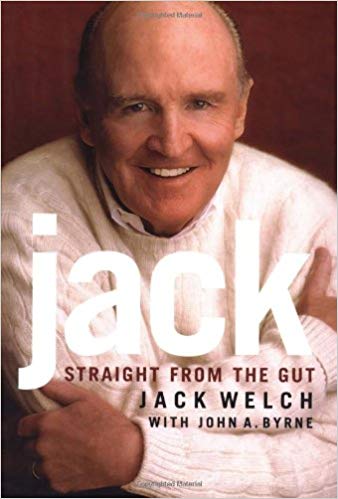
Jack: Straight from the Gut
by Jack Welsh
The CEO of General Electric looks back on his distinguished career with the corporation and shares his personal philosophy of business and innovative managerial style. (Business & Finance)

Little Green Book of Getting Your Way: How to Speak, Write, Present, Persuade, Influence, and Sell Your Point of View to Others
by Jeffrey Gitomer
Following in the bestselling footsteps of Little Red Book of Selling, Little Red Book of Sales Answers, Little Black Book of Connections, and The Little Gold Book of YES! Attitude, Jeffrey Gitomer’s The Little Green Book of Getting Your Way digs deep into the 9.5 elements that make persuasion, and getting your way, happen. By breaking down the elements, the reader will begin to understand, take action, become proficient, and then master the ability to persuade. Because persuasion occurs in so many different areas of life and business, Gitomer leads the reader from mental readiness to the principles of getting your way and the power that persuasion offers. He challenges the reader to prepare before they present, to prepare before they try to persuade. He demonstrates how to change a presentation into a performance and shows how this can be done in any environment. But because persuasion most often takes place in business, he draws special emphasis to the reader’s ability to write and sell persuasively. The book talks about the persistence that enables winning persuasion. He brings the Benjamin Franklin quote “If at first you don’t succeed, try, try again” to the Gitomer level of “You only fail when you decide to quit,” and the book ends challenging the reader how to think about excellence and eloquence. It will be up to the reader to take advantage of the opportunity and harness the power.
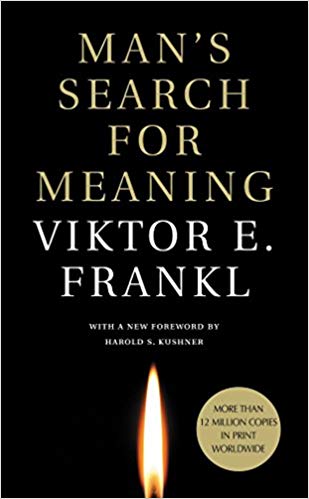
Man’s Search for Meaning
by Viktor E. Frankl
Psychiatrist Viktor Frankl’s memoir has riveted generations of readers with its descriptions of life in Nazi death camps and its lessons for spiritual survival. Between 1942 and 1945 Frankl labored in four different camps, including Auschwitz, while his parents, brother, and pregnant wife perished. Based on his own experience and the experiences of others he treated later in his practice, Frankl argues that we cannot avoid suffering but we can choose how to cope with it, find meaning in it, and move forward with renewed purpose. Frankl’s theory-known as logotherapy, from the Greek word logos (“meaning”)-holds that our primary drive in life is not pleasure, as Freud maintained, but the discovery and pursuit of what we personally find meaningful.
At the time of Frankl’s death in 1997, Man’s Search for Meaning had sold more than 10 million copies in twenty-four languages. A 1991 reader survey for the Library of Congress that asked readers to name a “book that made a difference in your life” found Man’s Search for Meaningamong the ten most influential books in America.
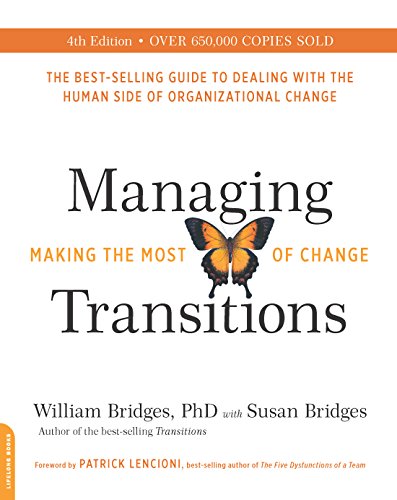
Managing Transitions, 25th anniversary edition: Making the Most of Change
by William Bridges
The business world is constantly transforming. When restructures, mergers, bankruptcies, and layoffs hit the workplace, employees and managers naturally find the resulting situational shifts to be challenging. But the psychological transitions that accompany them are even more stressful. Organizational transitions affect people; it is always people, rather than a company, who have to embrace a new situation and carry out the corresponding change.
As veteran business consultant William Bridges explains, transition is successful when employees have a purpose, a plan, and a part to play. This indispensable guide is now updated to reflect the challenges of today’s ever-changing, always-on, and globally connected workplaces. Directed at managers on all rungs of the corporate ladder, this expanded edition of the classic bestseller provides practical, step-by-step strategies for minimizing disruptions and navigating uncertain times.
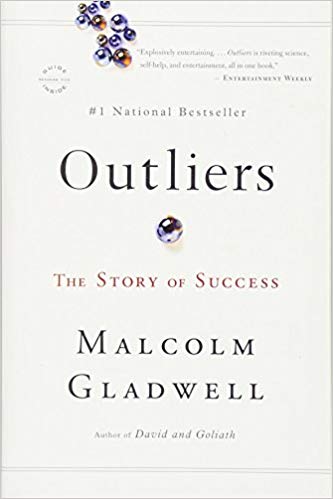
Outliers: The Story of Success
by Malcolm Gladwell
In this stunning new book, Malcolm Gladwell takes us on an intellectual journey through the world of “outliers”–the best and the brightest, the most famous and the most successful. He asks the question: what makes high-achievers different?
His answer is that we pay too much attention to what successful people are like, and too little attention to where they are from: that is, their culture, their family, their generation, and the idiosyncratic experiences of their upbringing. Along the way he explains the secrets of software billionaires, what it takes to be a great soccer player, why Asians are good at math, and what made the Beatles the greatest rock band.
Brilliant and entertaining, Outliers is a landmark work that will simultaneously delight and illuminate.
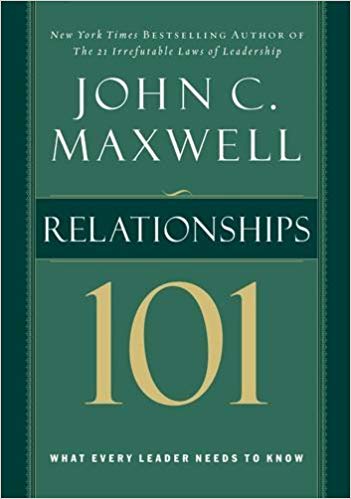
Relationships 101 (101 Series)
by John C. Maxwell
Great leadership is built on great relationships!
Leadership is a relationship-intensive endeavor. If your people skills aren’t strong, neither will be your leadership. “If people aren’t following you,” sums up New York Times and Business Weekbest-selling author Dr. John C. Maxwell, “then you’re not really leading.” In Relationships 101, Maxwell provides time-tested principles for developing healthy relationships with others―inside and outside of your organization―such as:
- The fundamentals common to all good relationships
- How to motivate people by knowing five things everyone has in common
- How to create a lasting connection with people on your team
- Why listening skills can be a leader’s best friend
- The crucial factor that creates the foundation of all good relationships
- The most important relationship for any person’s success
Winning in every area of life comes from winning with people.
Improve your leadership and life with Relationships 101!
.
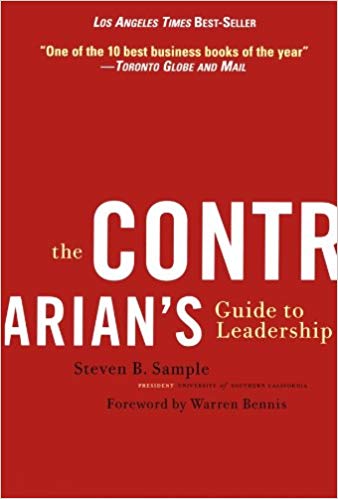
The Contrarian’s Guide to Leadership
by Steven B. Sample
In this offbeat approach to leadership, college president Steven B. Sample-the man who turned the University of Southern California into one of the most respected and highly rated universities in the country-challenges many conventional teachings on the subject. Here, Sample outlines an iconoclastic style of leadership that flies in the face of current leadership thought, but a style that unquestionably works, nevertheless. Sample urges leaders and aspiring leaders to focus on some key counterintuitive truths. He offers his own down-to-earth, homespun, and often provocative advice on some complex and thoughtful issues. And he provides many practical, if controversial, tactics for successful leadership, suggesting, among other things, that leaders should sometimes compromise their principles, not read everything that comes across their desks, and always put off decisions.